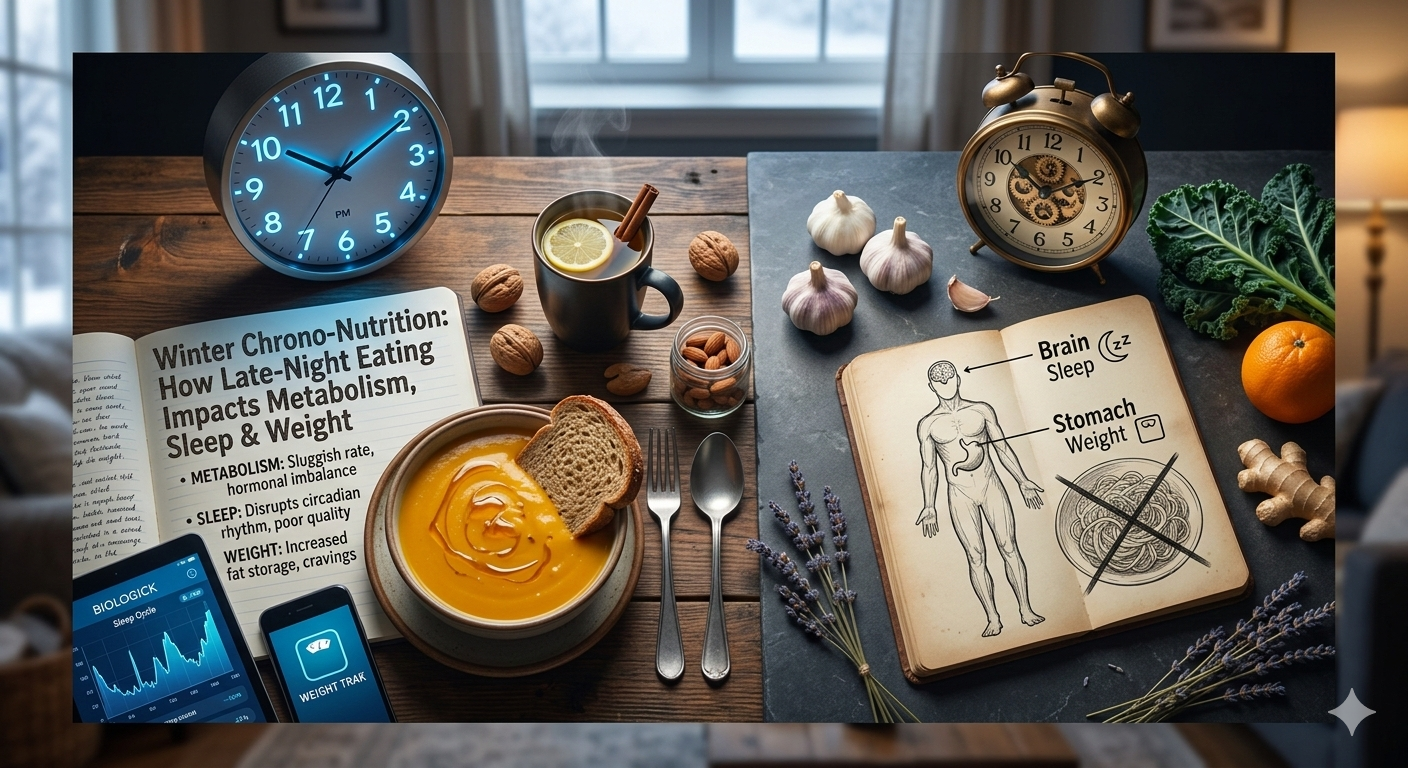
Winter Nights, Late Dinners & Your Metabolism: What Chrono-Nutrition Research Really Says
Short days, long nights, endless snacking — winter quietly pushes many of us into a later, heavier eating pattern. You may notice:
- Heavier dinners creeping later into the evening
- More cravings for carb‑rich comfort foods after dark
- Poor sleep after “just a little snack” at 10:30 pm
This isn’t just a willpower problem. It’s a timing problem.
Welcome to the world of chrono-nutrition — how when you eat shapes metabolism, appetite, and sleep. Over the last decade, research has become clear: the same meal at 7 pm and 11 pm can have very different effects on blood sugar, fat storage, and hunger hormones.
In winter, when our circadian rhythms are already challenged by less daylight and more time indoors, getting meal timing wrong can amplify weight gain, low energy, and restless sleep.
The Science of “When You Eat” (Not Just What)
Your Body Has a 24-Hour Metabolic Clock
Most people know about the circadian rhythm that controls sleep. Fewer realize your liver, gut, pancreas, and fat tissue also run on clocks. These internal clocks:
- Anticipate daytime eating and nighttime fasting
- Adjust insulin sensitivity across the day
- Shift how your body uses carbs vs. fat as fuel
Key stat: Research consistently shows we are more insulin sensitive in the morning and become progressively more insulin resistant into the evening. The same meal can lead to 25–50% higher blood sugar response at night compared with earlier in the day.
A 2023 review in Annual Review of Nutrition summarized dozens of studies: later eating is associated with higher blood glucose, impaired fat oxidation, and increased hunger the next day — even when calories are matched.
Winter Makes Timing Harder
Winter adds several stressors to this system:
- Less light exposure in the morning → weaker circadian anchor
- More screen time at night → blue light delays melatonin
- Comfort eating for warmth and mood regulation
- Reduced activity → lower energy expenditure, but the same (or higher) intake
The result: bigger meals later, less movement, disrupted sleep — a perfect storm for metabolic slowdown.
What Late-Night Eating Actually Does Inside Your Body
1. Raises Nighttime Blood Sugar & Insulin
In controlled studies where participants eat identical meals at different times, late eating consistently causes:
- Higher blood glucose levels
- Greater insulin secretion
- Slower return to baseline
In one crossover trial, participants ate their main meal at either 1 pm or 4:30 pm. The later meal increased post-meal glucose and reduced fat burning. Other work has shown that a large late-night dinner (after ~9 pm) can keep glucose elevated into the early hours of sleep.
A 2022 study in Cell Metabolism found that eating 4 hours later (same calories, same foods) led to:
• 60% lower fat burning across 24 hours
• Increased hunger hormones (ghrelin)
• Participants reported feeling hungrier the next day
2. Blunts Fat Burning During Sleep
Nighttime is when your body should be:
- Repairing tissues
- Consolidating memory
- Shifting into fat oxidation (burning stored energy)
Heavy meals close to bedtime delay that shift. Instead of drawing on stored energy, your body is busy managing incoming calories. Studies using indirect calorimetry show that late eating shifts the balance toward carbohydrate use and reduces overnight fat oxidation.
3. Disrupts Sleep Architecture
Sleep quality isn’t only about how long you sleep; it’s about stages and continuity. Late, rich, or large meals can:
- Increase awakenings and lighter sleep stages
- Exacerbate reflux/heartburn when lying down
- Elevate core body temperature (you need to cool down to fall asleep)
Your nervous system reads this as “still processing the day,” not “time for deep repair.” Many people see this in their wearables as lower sleep scores or reduced deep and REM sleep. If you track your heart rate variability (HRV), heavy late meals often show up as:
- Higher overnight heart rate
- Lower HRV (a marker of higher physiological stress)
Myths vs Facts About Night Eating
Myth 1: “It doesn’t matter when I eat if my calories are the same.”
Fact: Timing changes how your body handles those calories.
While long-term weight change is still primarily about energy balance, short- and medium-term studies show that late eating can:
- Increase hunger the following day
- Make it harder to maintain a calorie deficit
- Impair glucose control, independent of calories
In practical terms: yes, total calories matter — but late timing makes sticking to those calories and maintaining metabolic health more difficult.
Myth 2: “Carbs at night automatically turn into fat.”
Fact: Carbs at night are not inherently fattening; context matters.
Research does not support the idea that carbohydrates eaten at night are automatically stored as fat. What we do see is:
- Large, high-glycemic carb loads late at night worsen blood sugar
- Paired with inactivity and short sleep, this can support fat gain over time
- Evening carbs in moderate amounts, especially with protein and fiber, can support sleep by increasing tryptophan availability
So it’s not “no carbs after 6 pm.” It’s: be selective with type, amount, and timing relative to bedtime.
Myth 3: “I sleep better with a big meal right before bed.”
Fact: Many people fall asleep faster with a heavy meal but sleep less deeply.
Sedation (feeling knocked out) is not the same as restorative sleep. Objective data from wearables and lab polysomnography often show:
- Reduced deep and REM sleep after heavy late meals
- More awakenings, even if you don’t remember them
- Lower next-day alertness and higher sleepiness
How Late Is “Too Late”? What Studies Suggest
There is no universal cut-off, but several patterns emerge:
- Finishing dinner 2–3 hours before bed is repeatedly associated with better sleep and metabolic markers.
- Eating >50% of your daily calories after 6–7 pm is linked in observational studies to higher BMI and poorer glycemic control.
- For early chronotypes (“morning people”), late meals are especially disruptive; night owls tolerate them somewhat better, but not completely.
A 2020 meta-analysis found that people who concentrated their energy intake earlier in the day lost ~1.2–2.3 kg more over 8–12 weeks, even with similar total calories.
In winter, when many people go to bed slightly earlier and move less, shifting calories earlier can be a powerful, underused lever.
Chrono-Nutrition in Winter: A Practical Blueprint
1. Anchor Your Eating to Daylight (as Much as Possible)
You can’t change the season, but you can strengthen your internal clock:
- Get light early: 10–20 minutes of outdoor light within 1–2 hours of waking (even on cloudy days) improves circadian alignment and daytime appetite regulation.
- Front-load calories: Aim for ~60–70% of daily intake before 3–4 pm when possible.
- Set a “kitchen curfew”: Pick a time 2–3 hours before your target bedtime to be the last substantial meal.
If your schedule is late (night shift, late work hours), you’re not doomed — but structure becomes even more critical. Consistency in timing, even if shifted later than average, is still better than random, variable mealtimes.
2. Rethink Dinner Composition, Not Just Timing
For winter evenings, prioritize meals that are:
- Protein-forward (20–40 g): Supports muscle, satiety, and stable blood sugar.
- Moderate in smart carbs: Whole grains, root vegetables, legumes in reasonable portions.
- Rich in plants: Fiber to slow digestion and support gut health.
- Lower in heavy saturated fats: Very high-fat meals (e.g., greasy takeout) sit longer in the stomach and can impair sleep.
If you need inspiration for a protein-rich, balanced winter dinner that won’t “sit like a brick” at night, consider something like a spicy lean protein with whole grains and herbs, such as this one-pan harissa chicken with lemon orzo. It offers protein, moderate carbs, and flavor without overwhelming heaviness.
3. Use “Bridging Snacks” Strategically
Many late-night overeating episodes are the predictable outcome of under-fueling earlier. A pattern to watch for:
- Small or rushed breakfast → heavy hunger late afternoon
- Minimal lunch → large, fast evening meal
- Still not fully satisfied → snacking through the night
Instead, use planned, protein + fiber snacks 3–4 hours after meals:
- Greek yogurt with berries and nuts
- Hummus and vegetables
- Apple slices with peanut or almond butter
- Cottage cheese with fruit or cherry tomatoes
These can reduce the intensity of evening hunger and make it easier to stop after a normal-sized dinner.
Supporting Sleep & Recovery with Smart Nighttime Nutrition
1. A “Sleep-Smart” Evening Pattern
If your goal is better sleep and next-day readiness (especially in dark winter months), consider this template:
- 3–4 hours before bed: Main dinner, balanced plate, comfortable fullness, not stuffed.
- 1–2 hours before bed: Optional small “sleep snack” if truly hungry:
- Examples: kiwi, small bowl of oats with milk, banana with a spoon of nut butter, warm milk with cinnamon.
- These provide a small carb dose and tryptophan precursors, which can support melatonin production.
- 0–1 hour before bed: Only water or herbal tea; no heavy food.
People who track HRV and other biometrics often notice that dialing in this pattern improves overnight recovery. If you’re curious about interpreting those signals, explore how HRV reflects your nightly stress load.
2. Beverages That Help (and Hurt)
Evening drinks are often overlooked but important:
- Caffeine: For most people, cutting off by 2 pm is ideal; slow metabolizers may need a noon cut-off.
- Alcohol: May make you feel sleepy but fragments sleep, suppresses REM, and worsens overnight HRV. The closer to bed, the greater the impact.
- Sugar-heavy drinks: Late-night hot chocolate or sweet lattes spike glucose and may lead to 3 am wake-ups when levels crash.
- Helpful options: Herbal teas (chamomile, lemon balm, passionflower), warm milk, or decaf rooibos.
Winter Weight, Mood & Energy: Using Timing as a Lever
Winter is a high-risk period for:
- Subtle weight gain (even 0.5–1 kg per season accumulates over years)
- Seasonal affective symptoms (lower mood, fatigue)
- Reduced motivation to be active
Chrono-nutrition gives you a set of knobs to turn that don’t require extreme diets:
- Shifting a portion of calories earlier in the day
- Being more consistent with meal timing across weekdays and weekends
- Avoiding regular heavy meals in the 1–2 hours before bed
In combination with winter-specific strategies such as light exposure, moderate exercise, and good sleep hygiene, these timing tweaks can significantly affect your winter “readiness.” If you use wearables, you can even track how changes in your evening meals affect your own winter readiness and training capacity.
Putting It All Together: A 7-Day Winter Chrono-Nutrition Experiment
If you want to feel the difference rather than just read about it, try this one-week experiment:
Step 1: Define Your Bedtime Window
- Choose a 90-minute bedtime window you can mostly stick to (e.g., 10:00–11:30 pm).
- Protect at least 7 hours of time in bed.
Step 2: Set Meal Anchors
- Breakfast: Within 1–2 hours of waking, with 20–30 g protein.
- Lunch: 4–5 hours after breakfast; make this your most substantial meal.
- Dinner: Start 4–6 hours after lunch, and finish 2–3 hours before your earliest bedtime target.
Examples:
- Wake 7 am → Breakfast 7:30–8:00 → Lunch 12:00–1:00 → Dinner 5:30–7:00 pm → Bed 10:30–11:00.
Step 3: Structure Snacks
- Allow 1–2 planned snacks (mid-morning and/or mid-afternoon) with protein and fiber.
- If you are truly hungry after dinner, use a small carb + protein snack 60–90 minutes before bed, not right at lights-out.
Step 4: Track 3 Simple Outcomes
You don’t need a lab — just track:
- Evening hunger: Rate 1–10. Does it stabilize or become less intense?
- Sleep quality: How quickly you fall asleep, night awakenings, and how refreshed you feel.
- Energy & cravings the next day: Note afternoon crashes and evening sugar cravings.
If you use a wearable, add:
- Overnight resting heart rate
- HRV
- Time in deep and REM sleep
Most people notice changes by day 4–5 — especially less evening “compulsive” snacking and smoother mornings.
Key Takeaways
- Your metabolism and appetite are strongly influenced by when you eat, not just what you eat.
- Late-night eating — especially large, high-calorie meals — worsens blood sugar control, reduces fat burning, and disrupts sleep.
- Winter exaggerates these effects due to less daylight, more screen time, and comfort eating.
- Aiming to finish dinner 2–3 hours before bed, front-loading calories earlier in the day, and using smart snacks can materially improve energy, weight regulation, and sleep.
- You don’t need perfection. Even shifting your main meal 60–90 minutes earlier and slightly enlarging breakfast and lunch can move the needle.
If you’re already paying attention to food quality, timing is the next frontier. This winter, instead of another restrictive diet, experiment with when you eat — and let your circadian biology do more of the work for you.