Full-Moon Winter Snowshoe: Crystal Ridge Loop + Stargazing
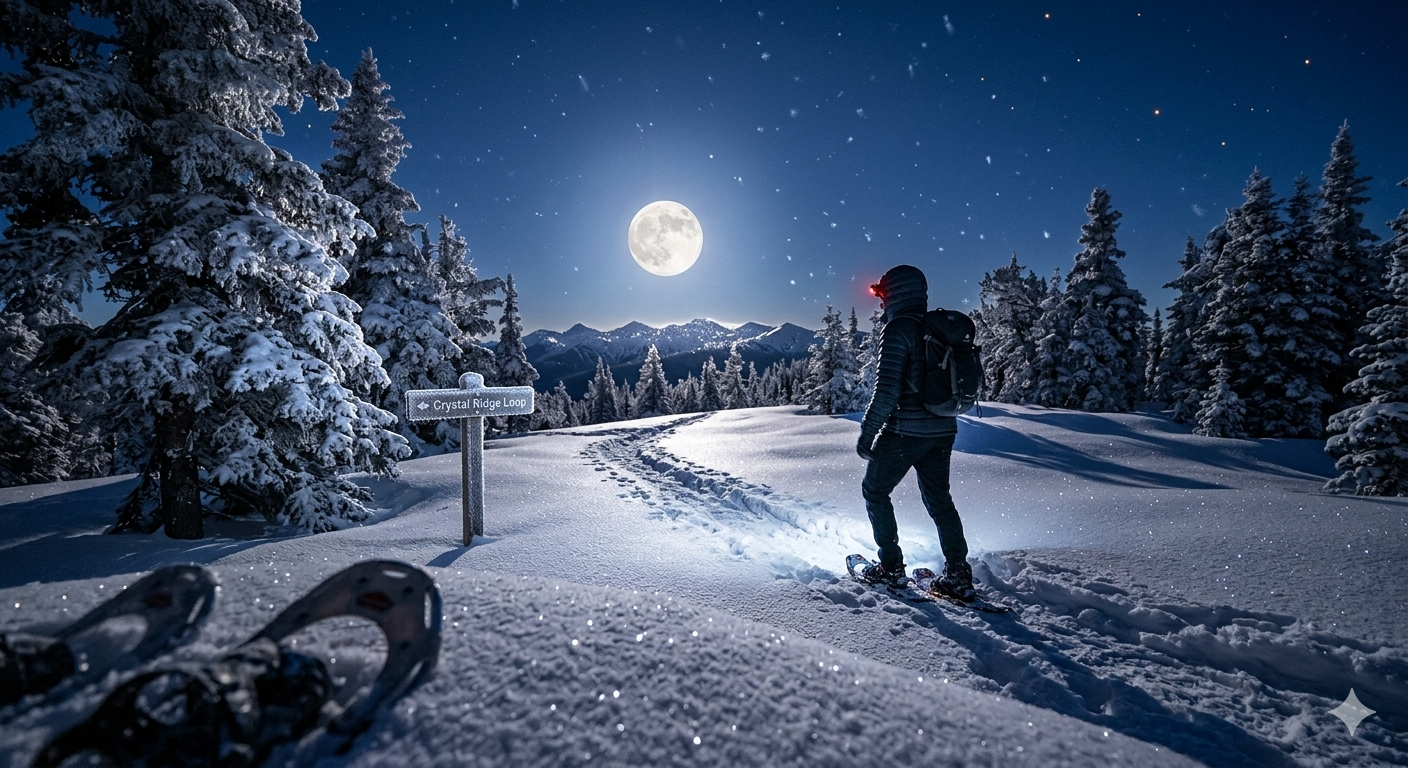
Why this adventure? On a clear winter night beneath a full moon, snowfields turn silver and the world feels clean and vast. This guided snowshoe loop pairs moderate exercise with low-light navigation and a short stargazing stop on a ridge — perfect for people craving a magical, memorable winter outing without technical climbing.
Quick Facts
- Difficulty: Moderate (requires winter fitness, comfortable with snow travel)
- Distance: 6.5 km (4.0 mi) loop
- Elevation Gain: 220 m (720 ft)
- Estimated Time: 3–4 hours round-trip (includes 30–45 min stargazing/rest)
- Best Time to Visit: Winter months; 3 nights before to 3 nights after full moon (late evening start)
Targeted Reader
This guide is for active outdoor enthusiasts with winter experience (comfortable with cold-weather basics) who want a short, intentional night adventure — not a technical mountaineering trip. If you love photography, quiet landscapes, and starry skies, this is for you.
Route Description
The Crystal Ridge Loop begins at the frozen trailhead parking, follows a groomed winter forest track that narrows into a snow-covered singletrack, climbs steadily to an exposed ridge with sweeping valley views, then descends through a wind-scoured alpine meadow back to the loop junction. Expect packed snow early; deeper drifts above tree line. The ridge is the stargazing stop — flat, sheltered on its lee side, and ideal for setting up a short break to enjoy the moonlit panorama.
Why night & full moon?
Full moons provide natural illumination, reducing the need for bright headlamps while creating dramatic shadows and texture on snow. Night hiking sharpens your senses and turns a familiar landscape into something otherworldly. Pairing movement and stillness (short hike + stargaze) makes the outing accessible and restorative.
Gear & Packing
Prepare for cold, wind, and changing conditions. Below is a practical gear table and a what-to-pack checklist optimized for winter night travel.
| Category | Items |
|---|---|
| Footwear | Waterproof insulated boots, gaiters |
| Snow Travel | Snowshoes (all-terrain), adjustable poles with snow baskets |
| Insulation | Midweight insulating jacket (synthetic or down), extra fleece layer |
| Shell | Waterproof, breathable shell jacket and pants |
| Head & Hands | Warm hat, balaclava or neck gaiter, insulated gloves + shell gloves |
| Navigation & Light | Headlamp (red/low-setting), GPS or map+compass, phone with offline map |
| Safety & Emergency | First-aid kit, emergency bivy or shelter, firestarter, multi-tool |
| Extras | Thermos with hot drink, snacks, camera, small sit pad |
What-to-Pack Checklist
- Essentials: Snowshoes, poles, insulated boots, headlamp (red light), map/compass or GPS
- Clothing (layering): Base layer (merino), insulating mid-layer, down/synthetic jacket, waterproof shell, extra socks
- Safety: First-aid, emergency blanket/bivy, whistle, firestarter, knife
- Navigation/Comms: Phone with offline map, fully charged power bank, small VHF/PLB if available
- Food/Drink: 1–1.5 L fluids (insulated bottle/thermos), high-calorie snacks, hot beverage in thermos
- Comfort: Sit pad, hand warmers, camera
Nutrition & Hydration
Cold weather increases calorie burn. Aim for 300–500 kcal per hour depending on effort. Use a mix of quick sugars and sustained fats/proteins:
- Pre-hike: Carbohydrate + protein meal (oats with nuts, or sandwich + fruit)
- Trail snacks: Energy bars, nuts, dried fruit, peanut butter sandwiches, chocolate
- Hot drink: Thermos with tea, broth, or hot chocolate — helps core temperature and morale
- Hydration: Insulated bottles to prevent freezing; sip regularly. Cold blunts thirst cues, so set a schedule (every 20–30 minutes).
Safety Tips
Weather & Conditions
- Check forecast and avalanche bulletin for your region. Avoid exposed ridge travel during high winds or storm fronts.
- Start early enough to return before late-night temperature drops and to match full-moon timing (moonrise/moonset times vary).
Cold Injuries & Hypothermia
- Watch for numbness, slurred speech, shivering that escalates. Warm hands/feet in sheltered spot; replace wet clothing immediately.
- Carry extra insulating layers and a vapor-barrier bag for emergencies.
Navigation at Night
- Use red light to preserve night vision; keep headlamp on low. Know the route on map before leaving; mark key junctions in GPS.
- Snow can obscure trail markers — follow terrain features and altitude profile rather than tracks alone.
Wildlife
- Most large wildlife (deer, moose) are less active at clear moonlit nights but may still be on slopes. Keep distance and avoid startling animals.
- Store food securely; minimize odors and avoid eating in sleeping areas if overnighting.
Emergency Protocols
- If someone is injured or hypothermic, shelter them from wind, add insulation, provide warm fluids if conscious, and call for help. Use PLB or cell emergency services if needed.
- Carry a whistle and know the local emergency number. Share your route and expected return time with a contact before leaving.
Seasonal Considerations (Winter)
Late winter (February–March) often offers clearer skies and more stable snowpack in many mountain regions, making it an excellent window for full-moon snowshoeing. However, daylight is limited — plan around moonrise and moonset and factor in colder overnight temps. Trailheads may require 4WD or snow chains; check access before departing.
Leave No Trace & Mountain Etiquette
- Stay on durable snow surfaces and avoid breaking crust in sensitive alpine zones.
- Pack out all trash, including food scraps. Minimize light pollution with low/redirected headlamps so others can enjoy the night sky.
Pre-Hike Checklist (Night Before)
- Check weather, avalanche, and access conditions
- Charge phone, headlamp batteries, and power bank
- Tell a trusted person your route and ETA
- Lay out layers and gear; pre-fill thermos
Final Notes — Embrace the Silence
Snow softens sound. Move deliberately, breathe the cold air, and let the moonlight reveal details you often miss. The Crystal Ridge Loop is designed to be approachable yet rewarding: a short ascent, a luminous ridge, and the deep calm of a winter night. With proper gear and preparation, this outing becomes not only exercise but a quiet, restorative ritual.