A: Easy Spring Day Hike (1–2 Hours)
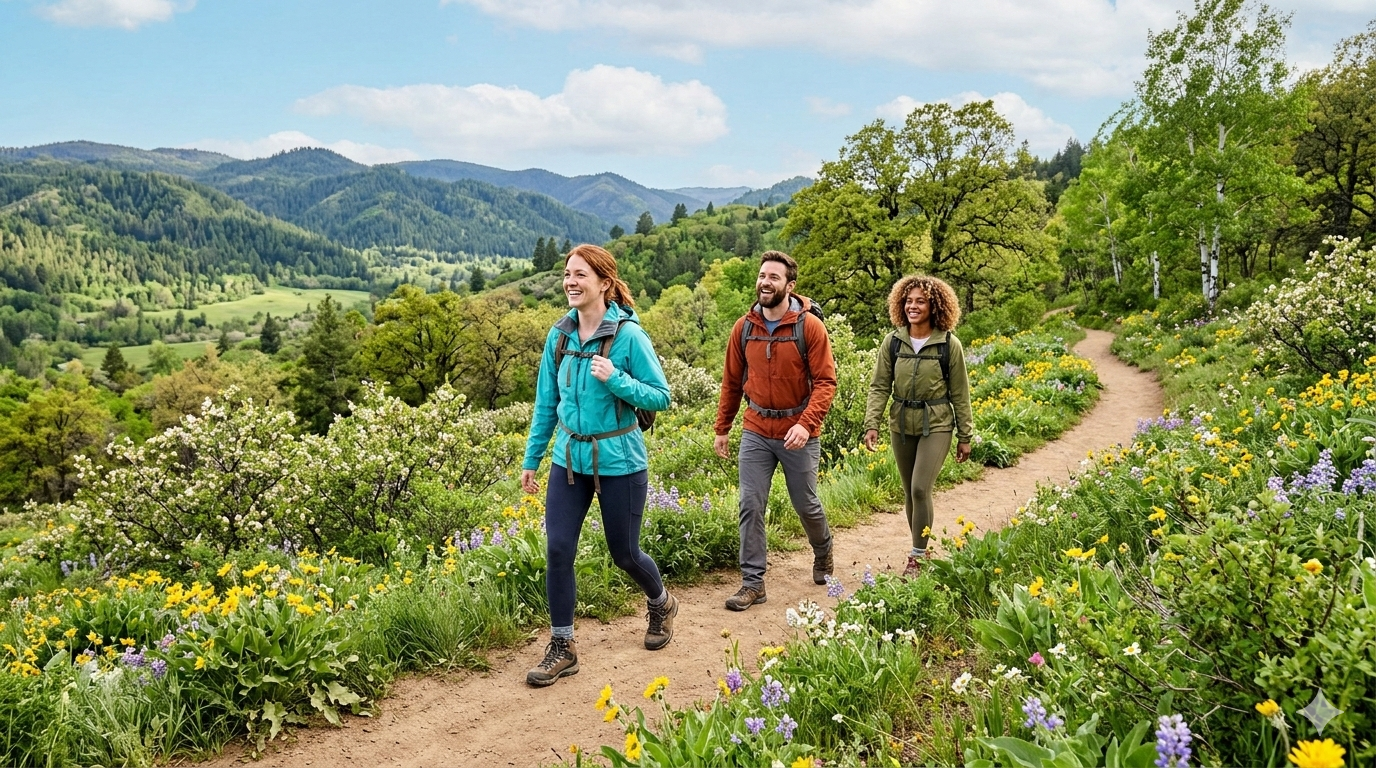
Step onto a flat, flower-framed path and breathe in spring—this easy day hike is the perfect reset button. Whether you’re new to trails or just craving a mellow wander, this 1–2 hour outing keeps things simple, scenic, and smile-inducing.
At-a-Glance
- Activity: Day Hiking
- Difficulty: Easy (flat, short)
- Distance: 2–5 km (1.2–3.1 mi)
- Elevation Gain: 0–100 m (0–330 ft)
- Estimated Time: 1–2 hours at a relaxed pace with photo stops
- Route Type: Park loop or out-and-back greenway
- Best Season: Spring (wildflowers, mild temps)
- Family-Friendly: Yes
- Dog-Friendly: Often, where permitted and leashed
Recommended Route Idea
Choose a local park loop or riverside greenway with minimal grade and clear signage. Look for names like “Wildflower Loop,” “Creekside Path,” or “Meadow Walk.” An example structure:
- Trailhead at visitor center or main parking; restrooms and map board
- Follow well-marked loop for 1–1.5 mi
- Optional spur to a viewpoint or footbridge (+0.5 mi)
- Return to trailhead; benches or picnic tables for a snack
Expect compact dirt, crushed gravel, or paved multi-use paths. Spring brings blooming trillium, buttercups, and migrating birds—bring curiosity and a camera.
What to Expect in Spring
- Bloom season: Early to mid-spring offers bursts of color; tread lightly around sensitive plants.
- Cool mornings, mild afternoons: Dress in light layers for changing temps.
- Wet or muddy sections: Waterproof or quick-dry footwear helps; step through mud, not around, to protect trail edges.
- More wildlife activity: Songbirds, pollinators, and possibly deer—observe from a respectful distance.
Essential Gear & Clothing (Spring, Easy Flat Trail)
| Item | Purpose | Notes |
|---|---|---|
| Comfortable trail runners or walking shoes | Traction and support | Prefer grippy soles; quick-dry uppers help with puddles |
| Light layers (tee + thin long sleeve) | Thermal comfort | Synthetic or merino; avoid cotton if possible |
| Packable rain/wind shell | Spring showers | ~150–250 g shell fits in daypack |
| Daypack (10–15 L) | Carry essentials | Comfortable straps; hip belt optional |
| Water (0.5–1 L) | Hydration | Add electrolytes if warm or humid |
| Snacks (200–300 kcal) | Energy | Fruits, bar, or trail mix; time them with your pre-hike fueling window |
| Sun protection | UV safety | Hat, sunglasses, SPF 30+ sunscreen |
| Insect repellent | Spring bugs | Especially around wetlands |
| Small first-aid kit | Blisters & scrapes | Bandages, blister care, antiseptic wipes |
| Phone with offline map | Navigation & safety | Download park map; carry a small power bank if needed |
| Whistle | Emergency signal | 3 blasts = distress |
| Optional: Trekking pole(s) | Stability | Useful if recovering from an injury |
| Optional: Sit pad / light blanket | Comfortable break | Enjoy snack time at a viewpoint |
| Optional: Binoculars / camera | Spring wildlife | Birds, blossoms, textures |
Quick Packing Checklist
- Trail shoes or comfy walking shoes
- Breathable base layer + light long sleeve
- Packable rain shell
- Daypack (10–15 L)
- 0.5–1 L water + electrolytes
- 1–2 easy-to-digest snacks
- Hat, sunglasses, sunscreen
- Insect repellent
- Small first-aid & blister kit
- Phone (offline map), ID, small cash/card
- Whistle; optional trekking pole
Nutrition & Hydration for a 1–2 Hour Easy Hike
- Before you go (1–3 hours prior): Have a light meal or snack with simple carbs and a bit of protein—think toast with nut butter, yogurt with fruit, or a banana and a small bar. For timing and portion ideas, see this guide on the pre-hike fueling window (1–3 hours).
- On trail: Sip water regularly; aim for ~250–400 ml per 30–45 minutes depending on temperature and effort. A small snack mid-hike (100–150 kcal) keeps energy steady.
- Electrolytes: If it’s warm or you sweat heavily, add a light electrolyte mix to one bottle.
- After: Refuel with a balanced snack—carbs to replenish, protein to repair (e.g., turkey sandwich, smoothie, or hummus wrap).
Not sure what to eat ahead of time? Use this practical guide to eat 1–3 hours before your walk without feeling heavy.
Safety, Navigation, and Trail Etiquette
- Weather check: Spring changes quickly; pack a light shell and confirm forecast and park alerts before leaving.
- Navigation: Snap a photo of the trailhead map; download an offline map; note key junctions and turnaround time.
- Wildlife: Give space to all animals; watch for snakes basking on warm paths; keep dogs leashed; tick check after hiking.
- Trail etiquette: Stay on marked paths; let uphill users have right of way; step to the side for faster users.
- Emergency basics: Share your plan and return time with someone. Carry a whistle (3 blasts) and know the nearest trailhead name. In emergencies, call local emergency services; if coverage is poor, move to higher ground or an open area.
- Leave No Trace: Pack out all trash, protect wildflowers by staying on trail, and keep noise low to preserve the spring soundscape.
Spring-Specific Tips
- Start a bit later: Allow the morning chill to lift; late morning or early afternoon can be perfect.
- Mud smart: Step through the middle of muddy spots to avoid widening the trail.
- Closures happen: Respect seasonal wildlife closures and muddy-trail advisories to prevent damage.
- Allergy-aware: Pack tissues and consider sunglasses to reduce pollen irritation.
Simple 90-Minute Spring Hike Plan
- T–24 hours: Check weather, park alerts, and lay out gear.
- T–1 to 3 hours: Have a light, carb-forward snack or meal—see ideas for what to eat 1–3 hours before you walk.
- T–30 minutes: Fill water, apply sunscreen, quick bathroom stop.
- Mileage: Walk 1–1.5 miles out, pause for photos/snack, then return or complete the loop.
- Pacing: Conversational pace; if you’re breathing hard, slow down and enjoy the views.
- Post-hike: Gentle calf/hip stretches, then a balanced snack and a few sips of water.
Choosing the Right Trail
- Look for: Flat multi-use paths, nature preserves, lakeside loops, or botanical garden trails.
- Accessibility: Paved or packed-gravel greenways are great for strollers and mobility aids.
- Facilities: Restrooms, benches, and wayfinding signs make for a relaxed outing.
Spring is an invitation. The air is soft, the light is kind, and every leaf seems new. Take your time, listen for birdsong along the creek, and let a gentle trail carry you into the season.